I'm busy at work with month end stuff, so I thought I would post some interesting ways to carve pumpkins.
This is from Hickok45, who I had the fortune of meeting earlier this year at the LuckyGunner Blogger Shoot.
If you click through to the video on his YouTube channel, you will see lots more pumpkin videos. Enjoy.
Friday, October 28, 2011
Thursday, October 27, 2011
Once More - Power In Numbers

If you read anything about shooting other than this blog, you know our Second Amendment rights are under attack like never before, even as more and more Supreme Court decisions confirm the self-defense right of the individual, and more and more states and localities do away with outmoded restrictions based on fear and mis-information.
That's why it's more important than ever that all shooters are members of the shooting rights organizations that are fighting for those rights.
The National Rifle Association is the 800 pound gorilla of the gun rights world. Say what you will about the politics and controversy, but you have to agree that when they call, they get appointments, and people listen. If you don't like their constant stream of solicitations, do like I do - drop them in the recycle bin. But keep your membership current, or, do like I did 15 years ago. Use their extended payment plan to become a Life Member. Yes, they will continue to ask you to upgrade, but now you don't have to do it, and you get a gun magazine every month for the rest of your life.

The Second Amendment Foundation is the group responsible for the Heller and McDonald Supreme Court cases, as well as the Ezell ruling which will eventually overturn the Chicago gun ban. This kind of work takes money, and $15 a year is well worth it.

But don't stop there. Tip O'Neill once said that all politics is local, and that's true in gun rights as well. Join your state gun rights group, and any local groups in your area.
I was going to put together a list of the state gun rights groups, but I found there is a great list on the lower right of the links on the main page at The Gun Wire. Check it out. Join.
WHY JOIN GUN RIGHTS GROUPS?
or
WHY DO YOU GIVE YOUR MONEY TO LOBBYISTS?
I'm asked that all the time. Here's my answer.
The First Amendment says
Congress shall make no law respecting an establishment of religion, or prohibiting the free exercise thereof; or abridging the freedom of speech, or of the press; or the right of the people peaceably to assemble, and to petition the Government for a redress of grievances.
Emphasis mine
I don't have the time or money to go to Atlanta or Washington and talk to all the people who can take away my gun rights.
But I can join with millions of others, and put our money together, and pay them to do it for us.
It's our right. And if the person I'm talking with respects my First Amendment right, then respecting the Second Amendment should follow.

Wednesday, October 26, 2011
Gun Safety With Children

Disclaimer - the information herein is based on my person experience, in my home, with my family. Your experience may be different. Before you consider any gun safety measures, consider you own situation and seek the advice of a qualified trainer.
Yesterday I read yet another story about a child who found their parent's loaded gun, and ended up shooting herself, and died. I'm not going to link to the story, because it's far to common.
The more I thought about it, the angrier I got. I bet I wrote 6 versions of a tweet, some of which I deleted because of profanity. I finally settled for
"Kids being shot with guns they find break my heart. If you have guns and kids but don't use a safe you're an idiot."
I've raised two children in a household with multiple guns, and I've never had a single safety issue with them. In our house, firearm safety is a two sided issue: equal parts physical gun security, and gun owner attitude. The current "gun safety" focus pushed by the anti-gun crowd focuses entirely on the physical gun security issue, and ignores the attitude issue, or, worse, fosters an attitude of fear, that is completely at odds with real gun safety. Let me explain.
PHYSICAL GUN SECURITY
There should be no way any unauthorized person in your house should be able to access a firearm without supervision. By "unauthorized person" I mean children and others who have no business with your firearms, like visitors or burglars.
For us, this means all guns were locked in a safe when not being carried by a responsible person. I have two safes, a Gunvault Master like the one pictured above, and a long gun safe. Both safes are bolted down, and the Gunvault pistol safe is placed high on a shelf in my closet, away from prying eyes and away from the casual observer.
We keep our carry handguns in a holster in this safe, with the door locked, whenever they are not being carried. The Gunvault will pop open in seconds, and my wife and I both practice opening it in the dark and under stress.
The long gun safe is kept in another part of the house, again, always locked, and away from prying eyes and away from the casual observer. My competition handguns and other handguns are kept here, along with my long guns.
Ammunition is stored separate from the long guns, in a locked cabinet that is not labeled in any way, because I don't want to draw attention to the cabinet, the safe, or my closet.
These physical security measures are zero tolerance, and no nonsense. We don't leave guns lying around, and we don't practice with them, clean them, or work on them in the normal living area.
There should never be "just this once," or "I'll put this here for a minute," or "I'll put this in my child's book bag for a minute, then put it up later." If you can't commit to that, you should not own a gun.
ATTITUDE
Now, as important as the physical security of my guns is, it is actually the backup leg of my plan. To me, the most important part is the attitude of those involved.
It starts with the attitude of my wife and me. You see, guns are not, in and of themselves, unsafe or dangerous in any way. No gun will ever just "go off." Guns don't shoot themselves.
We're not afraid of guns, so we've never acted that way around our kids. We don't teach them that they are evil or inherently dangerous.
Don't get me wrong - guns in the hands of the wrong person can be very very very dangerous and unsafe. But it's not the gun that's unsafe, it's the person. So we train the person to be safe.
Here's how I handled it:
First, our kids never even knew where my guns were kept until they knew how to shoot them, and my wife and I felt they were old enough and mature enough to handle that information. As a result, our kids didn't see my guns as a big deal. As far as I know (and I asked) they never hunted for them, and didn't try to show them off to their friends. In fact, until my daughter was old enough and experienced enough to be able to use a gun to defend herself, she never even knew the Gunvault was in my closet.
Second, we've never treated guns flippantly or casually. We never leave them lying around. I don't dry fire or practice with them when they are around. When I clean them or work on them, it's at my work bench in the garage. But I have shown my kids what I do when I clean them, by showing how to unload them, separate the ammunition, and make sure the guns are safe. Then, when I was done, they knew the guns went back in the safe, or back on my belt.
Third, as soon as they were old enough, I began teaching them the Rules of Gun Safety, and the Eddie Eagle principles of "Stop, Don't Touch, Call an Adult."
Teaching the Four Rules started with toy guns and Nerf guns, so that by the time we were ready for the "real thing," they knew the Rules.
I even tested them on the Rules. Once, when my son and I were getting out his BB gun, I shook it, then handed it to him. I asked, "Is it loaded?" He shook it and said, "No."
Wrong answer. Rule 1 is "All guns are always loaded." So the gun went back up, and we shot another day.
Cruel? No. Because he knows now to always treat every gun as if it were loaded, because you can't always tell when they are and when they are not. (More on this Rule in an upcoming post.)
As my children grew, I taught them more and more about gun safety and marksmanship. This grew into an attitude of respect, rather than fear.
Of course, toddlers, visitors, and intruders may come across an unsecured gun by accident. That's why we have the safes - as a backup, so this doesn't happen.
But, again, there is a zero tolerance here. If you can't own a gun without being afraid of it, you shouldn't own a gun. If you're afraid of it, that fear will show to those around you, and you won't be able to use it right when you need to.
++++
So why do we find kids getting killed with guns they find, or carry to school? To me, it's because we instill the wrong attitude in them.
By instilling fear of guns into everyone, the anti-gun factions make things more dangerous. They seek to make the gun itself the villain. The problem is that kids and the immature react two ways to fear, that are actually the reverse of what you would wish to see.
Children and the immature have an almost morbid curiosity about the unknown, especially unknown symbols of fear. As a result, they want to seek them out. But, those who fear guns are also too absorbed by that fear to learn safe gun handling, the Rules of Gun Safety, or anything that would make them safer, were they ever to encounter a real gun. So, when they do handle a gun, they do all the wrong and unsafe things with them, with well-known deadly results.
Know your children, know your family, know your guns. Store your guns safely, use them safely, and treat them with respect.
Tuesday, October 25, 2011
Podcast of the Week - The RoadGunner

Photo courtesy of the Un-Named Trucker
Okay, I admit I am probably the last gun guy in America to discover the RoadGunner Podcast. But I'm here now, and that's what counts.
Over the last year my gun podcast repertoire has expanded to cover the 30 plus mile commute that I face twice a day. I have gotten to where I listen to music maybe two or three afternoons, but beyond that my drive is taken up.
I started hearing about this new podcast called the RoadGunner, hosted by an over the road trucker. Okay. I've known a few over the road truckers in my time, so in my mind, this was a wonderful podcast full of stories of duck hunting and hog hunting and deer hunting and squirrel hunting and coyote hunting. I am not a hunter. So I held off.
Man, was I wrong.
After the Gun Dudes hosted Mas Ayoob's MAG40 class out in Utah, they started talking about what a good guy this new podcaster was. He goes by the name The Un-Named Trucker, because he's a trucker and he prefers to remain unnamed. He drives an over the road big rig, for a company whose policies prevent him from carrying a firearm for protection. I understand completely.
The man has a gift for talking about guns and shooting and self defense, as well as just about every other topic. This is understandable, since a trucker's life is spent behind the wheel, and he has ample time to work out not only the solutions to all the world's problems, but effective and memorable ways to express them. He records his show while driving through the lower 47 states of America. He doesn't visit New Jersey.
From his first show, this podcast has not failed to entertain and inform. Since he visits so many places, he's become an expert of sorts in the gun laws of the various states and locales. He knows where all the good gun ranges are, and, like any trucker, he knows where the best food is, so he includes a food review of some kind in every episode.
He is also a very good interviewer, and he uses that skill in a lot of the episodes. His interviews are very conversational, and I imagine this flows well from a trucker's natural skills - someone who spends almost all his day in the cab of a truck would probably be a very good conversationalist once he got to talk to someone in person.
Since I am late to the party, I am going back and listening to the old shows. The RoadGunner Podcast is published every weekend (again, this makes sense, since this is when a trucker is home the most) so I can fit it into my schedule any day. This is definitely a welcome addition to my weekly rota.
The RoadGunner podcast is a member of the Gun Rights Radio Network, and is available for subscription on iTunes.
Monday, October 24, 2011
A New Blog - Sorta
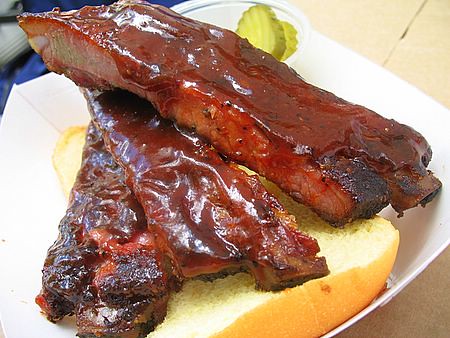
Back before September 11, JP and I got a wild idea one evening, to flaunt our American liberties in the face of America's Islamist enemies, in order to show that we have not been dissuaded by anything they could put together. The result was a blog called Bacon and Boomsticks.
While I did post a few examples, I have to admit that I wasn't able to give this site the marketing effort needed for it to really take off.
I haven't talked a lot about it here, but one of the things I love as much as shooting is cooking. Now, a lot of bloggers combine their loves into one record, and that's okay.
So, today I am announcing that Bacon and Boomsticks (B&B) will become a blog devoted to barbecue, grilling, and other forms of cooking. I also plan to review barbecue joints, beers, and other refreshments. Yes, if I go to a barbecue, then there will be guns, since the folks I hang with bring their guns, and you'll see them there.
I can't say how often I will post. When I find something interesting, you'll see it there. I can't say whether there will be many cross-posts, but I will be sure to provide a link here so you can catch up.
If you enjoy burned meat, chili, and beer as much as I do, then we're both in for a treat.
A New Blog - Balloon Goes Up
I noted a tremor in the force, and found a neat new blog, Balloon Goes Up. I was especially impressed with his post on his Get Home Bag. In it he relates an interesting rule of thumb called the 10 C's of Survivability. I need to review my plans against them.
This reminds me that it's getting close to winter, and it's time to review, refresh, and renew my Get Home Bag. It also occurs to me that I should take pictures of the stuff that goes in my bag.
This reminds me that it's getting close to winter, and it's time to review, refresh, and renew my Get Home Bag. It also occurs to me that I should take pictures of the stuff that goes in my bag.
Friday, October 21, 2011
The Safety Rules In Depth - Part 1
I've recently been thinking about the Rules of Gun Safety. As I see them, they are:
As I've said before, these are the classic rules (1 through 4) as developed by Lt. Col. Jeff Cooper, plus a couple that I emphasize as well.
I have a 14 year old son who is learning to shoot, and he has various friends who join us. Since we live about an hour from the range, every shooting session starts with a discussion of the rules. I've found that some points resonate well with these guys, so I wanted to share what we've talked about.
+++++
Rule 0: Eyes and Ears.
Or, Always wear eye protection, and hearing protection where warranted.
[My version of this rule says "hearing protection where warranted" because Rule 0 also applies to Airsoft guns, BB guns, and other non-gunpowder guns. I require my son and his friends to always wear shooting glasses during their maneuvers.]
TEENAGER VERSION
Protecting your sight and your hearing should be a no-brainer. You want to spend the rest of your life enjoying the world, and all the sights and sounds it has to offer. Think of life without music or television. Bleak, isn't it?
But a lot of people see movies and TV and soldiers and think they can get away with not wearing protection when shooting.
The problem is, when you shoot a gun without eye and ear protection, you are damaging your hearing every time, and you could damage your sight, if you get hit by a stray shell or ricochet. Hearing damage and sight damage are not reversible. Once you lose hearing, it's gone. The cilia in your ears, the little hairs that transmit the sound, don't grow back. And once you damage your eyes, chances are the damage is irreparable.
So, everybody put these on, keep them on, and don't give me any more lip.
+++++
GROWN-UP VERSION
[WARNING: Engineering content.]
EYES
The regulations and standards for protective eyewear are found in ANSI Standard Z87.1. Now, this standard covers eye protection for just about every exposure, not just impact, and it's quite involved.
But you should always use eyewear that's stamped somewhere with "Z87.1." This means it meets the impact standards at least.
Regular glasses generally don't meet this standard, because of the lack of impact resistance, and the lack of side shields. If you wear prescription glasses it may be worth it for you to get a pair of Z87.1 standard shooting glasses.
Off the shelf sunglasses fare even worse. May of them don't offer even basic impact protection.
Shooters' eye protection comes in all shapes and sizes and colors. Pick the one you like, and buy 2 or 3 pairs. Different colors help make targets easier to see in different light conditions. The most common are gray for sunny conditions, yellow or amber for low light, and vermillion, which enhances a beige or orange target.
EARS
The intensity of a noise, that is, how loud it is, is expressed in units of decibels, or dB. Hearing protection is rated by a Noise Reduction Rating, or NRR, which is also stated in dB. This is pretty much the measure of how much the ear protection reduces the noise level for the wearer.
Generally, noise about 85 dB is considered dangerous, since it can cause permanent damage. Noise over 140 dB is usually painful, and gunfire can range from 120 to 160 dB depending on the caliber and the surroundings of the shooter.
The NRR of hearing protection is measured by the manufacturer using a continuous noise, so its applicability to the sharp pressure wave of a gunshot isn't exact. However, most experts recommend using ear plugs or ear muffs with a NRR of 19 or higher when shooting.
Obviously, the higher the better. Ear plugs can work, if you use them right. Foam ear plugs need to be inserted all the way into the ear canal, almost flush with the ear opening. Roll them up, and insert them before they expand, by reaching behind your head and pulling your ear back, and inserting the plug with the other hand.
If you can see foam ear plugs sticking out of your ears, you don't have them in right.
Earmuffs are easier to use, but they can be hot, and they're bulkier. The choice is yours.
Personally, I wear foam earplugs with a NRR of 21, inserted correctly, during any time I'm at the range. Then, when it's my turn to shoot, I put on some earmuffs with a NRR of 25. This prevents me from having an involuntary startle reflex when I shoot.
+++++
Don't overlook eyes and ears around the home, too. Wear eye protection when you cut the grass or use hand tools. Wear hearing protection when you use power tools or lawn tools.
I even bought a set of ear buds for my iPod that fit into the ear canal, and provide a NRR of 22. Very nice when I'm cutting the grass, or on the airplane.
+++++
Finally, here's a good video that explains it all, from our friends at MidwayUSA.
Video courtesy of MidwayUSA
0. Always wear eye protection, and hearing protection where warranted.
1. All guns are always loaded.
2. Never let the muzzle cover anything which you are not willing to destroy.
3. Keep your finger OFF the trigger until your sights are on the target.
4. Always be sure of your target and what’s behind it.
5. Never try to catch a dropped gun.
As I've said before, these are the classic rules (1 through 4) as developed by Lt. Col. Jeff Cooper, plus a couple that I emphasize as well.
I have a 14 year old son who is learning to shoot, and he has various friends who join us. Since we live about an hour from the range, every shooting session starts with a discussion of the rules. I've found that some points resonate well with these guys, so I wanted to share what we've talked about.
+++++
Rule 0: Eyes and Ears.
Or, Always wear eye protection, and hearing protection where warranted.
[My version of this rule says "hearing protection where warranted" because Rule 0 also applies to Airsoft guns, BB guns, and other non-gunpowder guns. I require my son and his friends to always wear shooting glasses during their maneuvers.]
TEENAGER VERSION
Protecting your sight and your hearing should be a no-brainer. You want to spend the rest of your life enjoying the world, and all the sights and sounds it has to offer. Think of life without music or television. Bleak, isn't it?
But a lot of people see movies and TV and soldiers and think they can get away with not wearing protection when shooting.
The problem is, when you shoot a gun without eye and ear protection, you are damaging your hearing every time, and you could damage your sight, if you get hit by a stray shell or ricochet. Hearing damage and sight damage are not reversible. Once you lose hearing, it's gone. The cilia in your ears, the little hairs that transmit the sound, don't grow back. And once you damage your eyes, chances are the damage is irreparable.
So, everybody put these on, keep them on, and don't give me any more lip.
+++++
GROWN-UP VERSION
[WARNING: Engineering content.]
EYES
The regulations and standards for protective eyewear are found in ANSI Standard Z87.1. Now, this standard covers eye protection for just about every exposure, not just impact, and it's quite involved.
But you should always use eyewear that's stamped somewhere with "Z87.1." This means it meets the impact standards at least.
Regular glasses generally don't meet this standard, because of the lack of impact resistance, and the lack of side shields. If you wear prescription glasses it may be worth it for you to get a pair of Z87.1 standard shooting glasses.
Off the shelf sunglasses fare even worse. May of them don't offer even basic impact protection.
Shooters' eye protection comes in all shapes and sizes and colors. Pick the one you like, and buy 2 or 3 pairs. Different colors help make targets easier to see in different light conditions. The most common are gray for sunny conditions, yellow or amber for low light, and vermillion, which enhances a beige or orange target.
EARS
The intensity of a noise, that is, how loud it is, is expressed in units of decibels, or dB. Hearing protection is rated by a Noise Reduction Rating, or NRR, which is also stated in dB. This is pretty much the measure of how much the ear protection reduces the noise level for the wearer.
Generally, noise about 85 dB is considered dangerous, since it can cause permanent damage. Noise over 140 dB is usually painful, and gunfire can range from 120 to 160 dB depending on the caliber and the surroundings of the shooter.
The NRR of hearing protection is measured by the manufacturer using a continuous noise, so its applicability to the sharp pressure wave of a gunshot isn't exact. However, most experts recommend using ear plugs or ear muffs with a NRR of 19 or higher when shooting.
Obviously, the higher the better. Ear plugs can work, if you use them right. Foam ear plugs need to be inserted all the way into the ear canal, almost flush with the ear opening. Roll them up, and insert them before they expand, by reaching behind your head and pulling your ear back, and inserting the plug with the other hand.
If you can see foam ear plugs sticking out of your ears, you don't have them in right.
Earmuffs are easier to use, but they can be hot, and they're bulkier. The choice is yours.
Personally, I wear foam earplugs with a NRR of 21, inserted correctly, during any time I'm at the range. Then, when it's my turn to shoot, I put on some earmuffs with a NRR of 25. This prevents me from having an involuntary startle reflex when I shoot.
+++++
Don't overlook eyes and ears around the home, too. Wear eye protection when you cut the grass or use hand tools. Wear hearing protection when you use power tools or lawn tools.
I even bought a set of ear buds for my iPod that fit into the ear canal, and provide a NRR of 22. Very nice when I'm cutting the grass, or on the airplane.
+++++
Finally, here's a good video that explains it all, from our friends at MidwayUSA.
Video courtesy of MidwayUSA
Thursday, October 20, 2011
Shooter's Prayer

I saw today that David over at Musings Over a Pint has taken the last sentence to my post whining about my weekend, added as an afterthought, wherein I speculate that life may be just one big
When I breathe my last, and open my eyes in Glory, may the first thing I hear be "Unload and show clear." Amen.
Very nice. Thank you, David. I've already printed this on nice parchment and framed it and hung it in my den, and over my workbench at home. And thanks to Mrs. Hands for her stockpiling of picture frames against the coming zombie photo-apocalypse.
On his same post, he links to a story about St. Gabriel Possenti, who some are promoting to be named the Patron Saint of Handgunners. Take a moment to read his story. I don't think things like this "just happen."
Wednesday, October 19, 2011
Level Up


My Quest for C Class
I feel like I should be standing under a floating gold heart or something.
I got a new membership card in the mail yesterday from the USPSA. It turns out that I've shot enough matches with classifier stages that I have been classified. No longer do I need to put a "U" in the Class column when I sign in. And, I will now be competing against all others in my class.
My class? D Class in Production. It's what I expected. It means I've averaged under 40% in all my classifier stages so far.
How do I get to C Class? Practice.
I have to score 40% to 59.9% on the next 6 of 8 classifiers that I shoot. How long will that take? I don't know. Stay tuned.
Monday, October 17, 2011
If You Missed Out . . .

. . . on getting a gun from the ATF, you can still get the T shirt.
I may be the last one to mention it in their blog, but my friend and training buddy Sean Sorrentino did what a lot of people just thought about, and made up some T shirts that ask the pressing question, "Am I the only person on the planet that didn't get guns from the ATF?"
Shirts start at $16 plus shipping. An ample fellow like myself, who wants to leave room so I can put it in the dryer, will pay more.
He even has pink shirts. Perfect for those who wear that color.
Friday, October 14, 2011
In Memoriam

I was clicking around today looking for information on the US Army Marksmanship Unit (USAMU), when I came across the website for the Military Marksmanship Association, a private, non-profit group made up of former USAMU members. I was surprised to find there on the first page a familiar name, SFC Jason Sargent.
The last time I shot a GSSF match at Fort Benning in 2008, the USAMU served as Range Officers. Sergeant Sargent was the RO when I shot 5 to Glock. How could I forget that name?
I was also shooting with another shooter, for whom it was actually the first time they had shot a pistol. I was fascinated with how patient the other RO was with this new shooter, even though her strings took minutes to complete.
While we waited, SFC Sargent asked me, "Would you mind if I gave you a pointer?"
Well, duh. When the US Army Marksmanship Unit offers you free advice, you take it.
It turns out I was slapping the trigger, that is, removing my trigger finger from the trigger after every shot. He showed me how to shoot with reset, that it, to hold the trigger until the gun cycled, then release it just enough to reset the trigger, ready to fire. The difference was palpable, and I was able to reduce the time on my next string of fire by over 3 seconds.
It was probably the most valuable shooting advice I've every gotten, and I remember it vividly. After all, like I said, you don't forget someone named Sergeant Sargent.
But today, on the front page, was a link to SFC Sargent's obituary. I was stunned.
I will let you read his story. I certainly cannot do it justice.
SFC Sargent, thank you for your service, and for your advice. You will be remembered.
Podcast of the Week: Gunsmithing Radio

As I’ve spoken of many times, I like to fiddle around with my guns. I’m a certified Glock Armorer, and I own books on the SKS and Mossberg 500. But, I’m not a gunsmith by any stretch of the imagination.
That doesn’t stop me from becoming a really big fan of Fred Zeglin and his new podcast, Gunsmithing Radio.
This is a fairly new podcast, with 4 episodes so far. There doesn't seem to be any set schedule. In fact, I just happened to notice a new episode on my iPod this morning.
In the first episode, Fred explains that Mark Vanderberg, the founder of Gun Rights Radio Network, approached him to start a podcast about gunsmithing. Fred has been a gunsmith for about 30 years, and he agreed. I’m glad he did.
Episode 1 begins with an explanation of gunsmithing and how Fred got into the craft. Episode 2 explains how to become a gunsmith.
Episode 3 gets a bet more technical, by explaining the tools a gunsmith uses, and a little about how they figure into the business side of being a gunsmith.
I was just fine with my level of tinkering, to this point.
Then Episode 4 moves into how to do specific things with a specific rifle, namely modifying the trigger guard of the venerable Mauser bolt-action rifle. I listened, but I have to admit didn’t get all of it. For one thing, most of what he talked about was beyond my skill level, and second, I haven’t even shot a Mauser before, let alone disassembled one.
But all that aside, I’m a fan, for a number of reasons.
The first is the host. Fred’s style and tone is wonderful, at once conversational and professional. You can tell he’s had a lot of experience teaching his craft, which is a good thing, since gunsmithing is danger of becoming a dying field.
Second is that, even though I didn’t understand it all, this is what I call a "timeless" podcast, one I can keep, and listen to any time, from now on. It’s not so immediate that it loses its relevance in a week. Mausers will always be Mausers. Or not – that’s the beauty of gunsmithing.
I discovered one thing, though, that may help me in the future. I subscribe to most of my podcasts through iTunes, and I rarely visit the individual podcast websites. When I was researching this post, I visited the podcast website, and I found pictures of the Mauser, and all the modifications Fred talked about in Episode 4. So, next time, I’ll pay attention when Episode 5 shows up on my iPod, and I’ll be sure to visit the website.
So, Gunsmithing Radio has taken a welcome place on my podcast rotation.
Announcing a Live Twitter Event
Wednesday October 26 is the 130th anniversary of the legendary Gunfight at the OK Corral, immortalized on film in several movies. To me the best is Tombstone.
Anyone who's followed me on Twitter for any time knows how much I like this movie. When it comes on TV I've been known to live tweet it, 5 or 6 times.
I am planning to watch a video copy, without interruption, starting at 9:00 PM Eastern Daylight Time on the evening of October 26 (01:00 UT 27 October).
I will be live tweeting my thoughts, lines, and other sundries using the hashtag #Tombstone. Please join me.
+++
I've done some research, and I find it fascinating to read the eyewitness accounts of the fight. I especially like that the court testimony of all the participants still exists, especially that of Wyatt Earp. A good many of them are listed in the References section of the Wikipedia article on the fight.
Reading these testimonies, one reason I like Tombstone the best is that director George Cosmatos seemed to go to lengths to match the action they portrayed to what the participants said happened.
More as the day approaches. . . .
Thursday, October 13, 2011
Sergei's Story

I was checking out some of the other blogs on the Gun Blog Black List and I came across Disabled & Shooting, and his post about his SKS. Since I had already planned a series on the backstories of my guns, I decided to tell you about Sergei, my SKS.
I was at the local gun store one day in 1993, and I noticed the distinct aroma of cosmoline coming from the back room. The owner told me he had gotten in a shipment of SKS rifles, and he had hired some local high school boys to clean them so he could sell them.
By the way, did I want one?
Well, I had received a year end safety bonus of $150, which happened to be the price he was asking. So Ronnie and I picked out one of the best looking, with all matching serial numbers, and away it went.
I took home a Chinese SKS carbine with wooden stock, which included a spike bayonet, sling, oiler, cleaning kit, ammo carrying chest pouch, and a set of ten stripper clips.
From the beginning, this was a good shooting gun. The front sight was a little off, but it was predictable enough that I could apply a little Kentucky Windage and be on target every time.
But I wasn't satisfied. Over the years, here are the mods I've made . . .
* Replaced the wooden stock with a polymer Monte Carlo style stock. The original wooden stock had a very short length of pull, not surprising given the small stature of its intended shooters. The new stock made it easier for me to get a good cheek weld.
* Replaced the Monte Carlo stock with a folding pistol grip stock. (That's the one shown in the photo above.) Yes, you can hip shoot it with the stock folded. I don't do that very often.
This also led to me first serious gunsmithing attempt, replacing the wood grained gas tube hand guard with a black plastic one. I used my Dremel to grind off the pin holding it on, then used a nail to pin the new on back in place, and ground it flush. I was proud.
* Bought a 30 round plastic magazine, and removed the 10 round fixed magazine. I added a second plastic magazine later.
But, one of the things I found when I took the gun to the Blogger Shoot and shot 200 rounds in one afternoon was that both of these plastic magazines suck. On both of them, the feed lips spread so much during use that they could not be put into place. I had to squeeze the feed lips together to get them to work at all.
So my next purchase will be some 30 round metal magazines. I know TAPCO makes plastic magazines that are supposed to be pretty good, so I may get one of those, too.
* Added a scope. I bought a 4-9 x 30 mm scope, that came with a new rear receiver cover and rings. My red dot scope also fits these rings.
* Added a vertical hand grip in the front. I also had to add a strip of rail to support it. This was simple - I just drilled through the lower front of the stock, and screwed on the rail using stainless screws and some blue Loc-Tite. I also painted the heads of the screws with some flat black model paint.
* Added a fluorescent plastic front sight post, and drifted it perfectly into place. The gun now shoots dead on to a 8 x 12 sheet of paper, hand held, at 100 yards. Did this take some getting used to, after having to aim left about 1/4 inch for 15 years? Yes - it took me 3 rounds.
Look for more mods in the future . . . .
New Blog Find of the Week

Since my inclusion in the Gun Blog Black List, I decided to check out some of the other blogs there. One caught my eye this morning . . .

DISABLED & SHOOTING
This blog is run by a guy who goes by the moniker Pimpley Bum, who describes himself thus:
Canadian Forces Vet, disabled during my service and trying to get back into shooting as a hobby. And sorry, I don't really care about the debate over the long gun registry and related legislation in Canada. I just want to enjoy my hobby.
Enjoyable reading. I was attracted by his post on his SKS modifications. Look for a post on this subject here later today.
Check it out!
Tuesday, October 11, 2011
What to Carry if You Can't Carry

A couple of recent events in my life got me thinking about the topic of what to carry should you find yourself in a situation where you can't carry a gun.
There are two situations where this would come up - involuntarily and voluntarily. While I have found the solutions are similar, they do differ some.
In the last week there have been 4 robberies or attempted robberies on or near the campus of Georgia Tech, in midtown Atlanta. This hits home because my daughter is a student there, and frequently passes by the place where some of the incidents happened.
Under the law in Georgia, students and faculty are prohibited from carrying guns, even with a valid Georgia Weapons Permit. Visitors to the campus are allowed to bring guns, but they must stay in your car. This leaves students on campus without firearms for defense.
So, for my daughter, there is a three-pronged solution to living in a gun-free victim zone. First, she doesn't travel alone on campus at night, and even in the day, she doesn't travel alone in areas that are not well traveled by others. As much as it pains me as a father, this is the one time I am glad she seems to be always surrounded by boys. Of course, with the Ratio at Tech, that's not hard to achieve.
Second, she carries pepper spray with her almost always. It's a cute little pink bottle I bought for her as a present when she first started school there.
Third, she's taken self defense courses, and she stays in shape. That way, she can fight or flee as the situation allows.
Does this make me feel better for her? A little. Her Mom, not as much. But we have come to accept that we do what we can.
++++
The other situation is voluntary. I'm not talking about the time when you decide to leave your gun in the car instead of taking it into the doctor's office - more the time when someone physically can't use a gun.
My mother-in-law lives alone in an apartment near us. My wife calls on her often, but she can't be there all the time.
Recently, my mother-in-law asked me for advice about what kind of gun she could buy for protection, and I had to be brutally honest with her - none. She isn't physically able to use a gun reliably. And even if she could, she isn't physically mobile enough to be able to go practice with it, or to be able to quickly reach her gun safe (required!) before an intruder did.
Plus she lives in an apartment, and Rule 4 means she would have no good field of fire any way. With the construction of her apartment, even .410 bird shot would take out her neighbor and her neighbor's neighbor.
The solution? A trip to Wal-Mart and $20, and I came home with 4 large cans of wasp spray and an air horn. Wasp spray in the eyes will totally ruin an intruder's day, and it looks a lot less menacing than a bear-sized can of pepper spray.
She now has a can of wasp spray in her bedroom, bathroom, living room, and kitchen, the four places she stays in the most. The air horn is by the couch, and she's talked to her neighbors, who now know that's her call for help.
I also got her a small can of pepper spray, that's on her key chain, for when she's going to and from her car.
++++
And my daughter's dorm room got a couple of large cans of wasp spray. Take note, boys.
++++
It's not a perfect world, and given that, we can't always be guaranteed our Second Amendment protections. But by thinking through the possibilities and planning ahead, we can make the most of what we do have.
Monday, October 10, 2011
Wheel Spinning

Well, family and other responsibilities prevented me from shooting USPSA on Saturday. Then, on Sunday, I planned to get out all my guns and all my photo equipment and shoot gun pr0n, to illustrate some upcoming gun reviews.
But first, I think I'll blow all the leaves off the driveway.
Only, now I remember the leaf blower won't start. So I check the easy things - plenty of gasoline flow, filter is clean. Spark plug is ugly. Off to the home center for a new one. That doesn't work.
So, I break it all down, and find the starter spindle has a tooth broken off. But the motor still turns when I pull the cord, so that's not it. So I put the compression gage on in place of the spark plug, and when I pulled the cord, the pressure is all over the place, never the same reading twice.
According to the gurus on the interwebz, who are all experts, the means bad gaskets, a cracked cylinder, or worse. Maybe $50 to repair. Given this machine is 7 years old, it's better to spend the money for a new one.
Back to the home center. But the only models they sell are the same make as the one I have. I'm not buying.
So I need more research, and maybe a backpack model.
But by now it's getting late. Too late to take pictures. Besides, I'm too annoyed to do a good job.
++++
Now I know why I shoot guns and play golf. Besides the exercise (dubious) and the tension relief (less dubious), they both involve an individual solution to a problem.
When I'm shooting a USPSA stage, I don't always solve the problem the best I can, but in the end, it's solved. And the Range Officer says "Unload and show clear," and I'm done.
I wish the rest of my life's problems had a Range Officer. One thing's for sure, when he asked at the beginning "Do you understand the course of fire? Any questions?" I would sure as hell speak up.
++++
Only now it occurs to me, when I breathe my last, and open my eyes in Glory, maybe the first thing I'll hear will be "Unload and show clear."
Friday, October 7, 2011
To Reload or Not To Reload

As I related recently, I am anticipating a bonus at work the end of the year, so I am looking at getting my first AR-15. While working over that decision, I came to the conclusion that an AR-15, even if it were given to me, would still cost me a lot of money to run. The reason is simple economics* - supply and demand. The supply of 5.56mm NATO ammunition is limited, and the demand is almost all going over to the Middle East or to military training, leaving a scant amount for civilian sales.
This lead me (back) to the idea of reloading.
The arguments for reloading are many, and they have different weights depending on your end use. For hunters, you can tailor a load to your specific need, or even load a caliber that isn't even made any more.
For me, the draws are obviously cost, availability, and customized competition loads.
COST
Their are 2 parts of the reloading cost equation - total cost, and rounds loaded. This yields a cost per round fired, and when you multiply that by 50 or 20, you can compare that to commercial ammo.
Like any manufacturing process, there are fixed costs and variable costs. The fixed cost is mostly the reloading press, dies, case cleaning equipment, reloading stand, and the other parts you need to buy. The variable cost is the brass, primer, powder, and bullet that makes up each round.
The variable cost is further complicated by economies of scale - that is, just like diapers, beer, and fighter planes, the more you buy, the lower the price per unit.
To decide whether a project is feasible economically, you figure the total variable cost per year, and subtract that from the cost to buy the ammo commercially. This is the annual variable cost savings. You then divide that into the fixed cost, to see how many years of shooting it would take you to pay for the reloading equipment.
So, I figured what it would cost to buy components for 2,000 rounds per year of 9mm, 500 rounds of .45ACP, and 1,000 rounds of 5.56mm, assuming I could re-use my pistol brass I already had, and I would buy once-fired military 5.56mm brass.
Comparing that to the cost of store-bought ammo, I figured I would save about $300 per year, or about one year to pay back $300 worth of reloading equipment. Admittedly this is rather sensitive to whether I can re-use brass, but it is still enough of a payout to justify it to me.
AVAILABILITY
For availability, I only have to remember my history. When the current war broke out, the availability of a lot of ammo went to zero, along with components like primers. As long as I stay ahead by laying in components when they're on sale, I can stay ahead of this as well as anyone, should it happen again.
CUSTOMIZED COMPETITION LOADS
Then there is the issue of customized loads, especially for competition. I can work up a low recoil 9mm load or .45ACP load, which would be easier to shoot, and cheaper as well. And since every AR is different, I can work up cheaper and easier shooting 5.56mm rounds too.
So, for me, the decision is made - I will buy a reloading press with the first part of the bonus, and whatever is left will go into the AR fund.
Now comes the next stage - what kind of reloading equipment to buy?
*Simple economics for capitalists, that is. If you're a socialist, never mind. Just seize someone else's ammo.
Thursday, October 6, 2011
Thoughts on Methods of Carry

JP over at the Empty Mags Podcast recently did an episode about pocket carry, that is, carrying a pistol in a pocket holster. I was reading other blogs who commented on this, and I wanted to share my thoughts.
There are several ways to carry a gun, and there is no way I can be exhaustive, but here is how I've done it.
My choice of carry method depends on several things, including the clothes I'm wearing and where I'm going.
By far the preferable way for me is belt carry, the traditional holster on the belt on the strong side, which I do when I can wear a concealing garment like a jacket or over shirt. I carry at almost the 3 o'clock position, maybe 3:30, and I would carry it even farther forward if I could work out reliable concealment. I just find that a draw at 3:00 or farther forward works best for me. When I open carry, I carry at 3:00.
I've used several kinds of holsters for this: Kydex paddle holsters, Kydex belt slide holsters, and leather belt slide holsters. Again it depends on what I'm wearing and where I'm going. If I need to take the holster off to go in a restricted place like the courthouse, I'll use a paddle holster, although I've also taken to using a leather belt slide holster, and carrying a leather IWB holster to put the gun in, and put it in safe keeping.
I also have a Bladetech double offset drop belt holster that I use for competition. That's it in the forward position in the picture.
Next on my preferred carry methods is Inside-the-Waistband, or IWB. All my IWB holsters are leather. I carry them at 3:00 also. I find that when the gun is canted forward a little, it rides right on my hip bone, which works really well.
Next is a fanny pack with an IWB holster in it. I stress that I always use a holster whenever I carry, even if it's in a fanny pack, so that the trigger guard is covered to prevent accidentally pressing it. I use a fanny pack when I'm out walking, wearing gym clothes. I've also used a very large fanny pack to carry in the car, and I sling it over my shoulder like a ruck sack. No one knows.
I also have an ankle holster that I bought at a gun show on a whim. I've never carried using it. My plan was to use it to carry my G19 as a backup gun. Maybe I should work on it.
Now, back to the issue of pocket holsters. Admittedly, I've never carried a gun in a pocket holster. In fact, I don't own a gun that's small enough to carry in a pocket holster.
I don't rule it out though. Michael Bane talks in his Down Range Podcast about methods of concealed carry, and I really like his strategy - whatever he's carrying on his belt, he almost always has a pocket pistol in his left front pocket as a backup. In his case, it's a Ruger LCP.
His thinking is this, and I like it - he doesn't plan to have to draw the gun quickly in most cases because his plan is to have his hand on the pistol, already partially drawn, when trouble goes down. Weer'd also talks about having his pocket pistol out and on the console.
Of course, this assumes we know when trouble is happening, which isn't always the case. But if we work on our situational awareness the chances of this go up a lot.
Wednesday, October 5, 2011
The Evolution of My Pistol Shooting Stance
I was looking at photos of people shooting, and I noticed the different ways people hold their guns when shooting. This got me thinking about how my own shooting stance has changed over time.
Here is a brief history of my shooting stance.

The Dueling Stance
This is the classic one handed bullseye stance. The shooter aims along the arm, and puts one hand in their pocket. I have no idea if this is still being done, but if I had to guess, it probably is, by bullseye competitors.
I’ve played around with this stance on occasion, but I don’t have the arm stamina to do it effectively. However, if I did need to do it, I would just get some training and practice.
The good news is I don’t have much reason to use this stance. I don't shoot bullseye and I don't settle quarrels with a duel.
Weaver Stance
This stance was the major stance in use in the early days of Practical Pistol. A lot of more experienced shooters still use this stance. A lot of Hollywood people who don't have a good instructor use this stance, some of them using the Teacup method with the support hand.
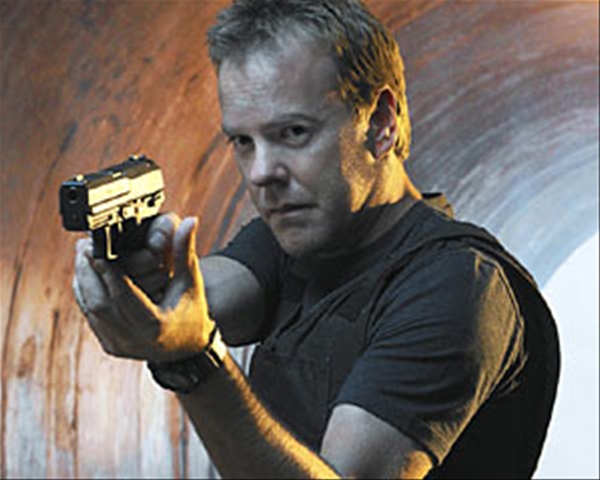

R. Lee Ermey uses the Weaver stance. This is interesting, because the military taught a one-handed shooting style with the 1911, up until adoption of the Beretta M92 in the 1980's.
I used the Weaver stance early on, because it gave me a better view of the sights. The gun is closer to the eye. It also turns your body a little bit, which stabilizes you against the recoil. Proponents also say it presents a smaller target to the bad guy, but to me that assumes you are standing there shooting at a bad guy, and not running like hell to get away, like you should be.
Isosceles Stance

This stance is named for the triangle that the arms make when holding the gun in front of the shooter. It was pioneered by Brian Enos and Rob Leatham in the 80’s.
I noticed that a lot of shooters used this stance, and I tried it a number of times. Some of them lock their elbows, like Dave Sevigny, and some leave the elbows a little bent, like Doug Koenig. I tried it both ways.
But because it was uncomfortable to me – that is, unfamiliar – I quickly went back to the Weaver stance.
On a couple of practice occasions, I decided to see how accurate I could be with each stance. I found out that I was a lot more accurate using the Isosceles stance than the Weaver, and I mean a lot more accurate. I think it has to do with the variability of the hold. In the Weaver I kept my strong arm a little bent, and I think this led to differences from shot to shot.
After a few sessions, I finally convinced myself to switch to Isosceles. It wasn’t easy – no change ever is. But it’s paid off for me.
Now, I occasionally find myself back in the Weaver stance, for no apparent reason. Habit I guess.
My point of all this is to say, try all the stances. Don't use a stance just because you think it looks good on Jack Bauer. Use what works. And if people give you grief, let your score do the talking.
Here is a brief history of my shooting stance.

The Dueling Stance
This is the classic one handed bullseye stance. The shooter aims along the arm, and puts one hand in their pocket. I have no idea if this is still being done, but if I had to guess, it probably is, by bullseye competitors.
I’ve played around with this stance on occasion, but I don’t have the arm stamina to do it effectively. However, if I did need to do it, I would just get some training and practice.
The good news is I don’t have much reason to use this stance. I don't shoot bullseye and I don't settle quarrels with a duel.
Weaver Stance
This stance was the major stance in use in the early days of Practical Pistol. A lot of more experienced shooters still use this stance. A lot of Hollywood people who don't have a good instructor use this stance, some of them using the Teacup method with the support hand.

R. Lee Ermey uses the Weaver stance. This is interesting, because the military taught a one-handed shooting style with the 1911, up until adoption of the Beretta M92 in the 1980's.
I used the Weaver stance early on, because it gave me a better view of the sights. The gun is closer to the eye. It also turns your body a little bit, which stabilizes you against the recoil. Proponents also say it presents a smaller target to the bad guy, but to me that assumes you are standing there shooting at a bad guy, and not running like hell to get away, like you should be.
Isosceles Stance
This stance is named for the triangle that the arms make when holding the gun in front of the shooter. It was pioneered by Brian Enos and Rob Leatham in the 80’s.
I noticed that a lot of shooters used this stance, and I tried it a number of times. Some of them lock their elbows, like Dave Sevigny, and some leave the elbows a little bent, like Doug Koenig. I tried it both ways.
But because it was uncomfortable to me – that is, unfamiliar – I quickly went back to the Weaver stance.
On a couple of practice occasions, I decided to see how accurate I could be with each stance. I found out that I was a lot more accurate using the Isosceles stance than the Weaver, and I mean a lot more accurate. I think it has to do with the variability of the hold. In the Weaver I kept my strong arm a little bent, and I think this led to differences from shot to shot.
After a few sessions, I finally convinced myself to switch to Isosceles. It wasn’t easy – no change ever is. But it’s paid off for me.
Now, I occasionally find myself back in the Weaver stance, for no apparent reason. Habit I guess.
My point of all this is to say, try all the stances. Don't use a stance just because you think it looks good on Jack Bauer. Use what works. And if people give you grief, let your score do the talking.
Monday, October 3, 2011
Stuff
I write myself notes all the time about ideas for blog posts. From time to time I get them together and try to make sense of them.
+++
I found another shooter at work last week. He and I spent lunch at the range on Friday. He's got a Glock 21SF like me, so we shared our experiences with them. I noticed his has the normal Glock magazine release, while mine has the ambidextrous SF release. To be honest I would prefer the normal release - I should have asked when I bought this one.
I was cleaning out my stuff Sunday and found an old G21 magazine, 10 rounds, that I've had 10 years or more. A guy I used to work with flipped repo'd cars as a hobby, and I was helping him detail a Corvette when we found it under the seat. I tried to trade it a couple times over the years, and I was disappointed that it didn't work with my new gun when I got it.
Anyway, I gave it to my friend. I guess kept it all these years just for this time.
+++
I'm working on a post about my Rules of Engagement, and it's sparked some interesting discussion around the house. What started out pretty straightforward turns out to be more complicated than I thought. The post will likely involve not only my rules, but the process behind them.
+++
Reviewing my traffic numbers, the most hits I get from Google are for my ammo reviews. Not that I'm writing for more traffic, but is that something I should be doing more of?
Thoughts?
+++
I found another shooter at work last week. He and I spent lunch at the range on Friday. He's got a Glock 21SF like me, so we shared our experiences with them. I noticed his has the normal Glock magazine release, while mine has the ambidextrous SF release. To be honest I would prefer the normal release - I should have asked when I bought this one.
I was cleaning out my stuff Sunday and found an old G21 magazine, 10 rounds, that I've had 10 years or more. A guy I used to work with flipped repo'd cars as a hobby, and I was helping him detail a Corvette when we found it under the seat. I tried to trade it a couple times over the years, and I was disappointed that it didn't work with my new gun when I got it.
Anyway, I gave it to my friend. I guess kept it all these years just for this time.
+++
I'm working on a post about my Rules of Engagement, and it's sparked some interesting discussion around the house. What started out pretty straightforward turns out to be more complicated than I thought. The post will likely involve not only my rules, but the process behind them.
+++
Reviewing my traffic numbers, the most hits I get from Google are for my ammo reviews. Not that I'm writing for more traffic, but is that something I should be doing more of?
Thoughts?
Subscribe to:
Posts (Atom)